
HELLO! IS IT ME YOU’RE LOOKING FOR?
What Lionel Richie can tell us about online talent attraction.
By Dermot Grazebrook, Blueprint Talent

In the 1980s, the great Lionel Richie foresaw the future of digital talent attraction in the 21stC! He shared it with us in his hit song: Hello.
When you read the chorus of this timeless pop power ballad, it’s hard to think of a better set of lyrics to describe the process for sourcing, identifying and engaging with the right candidate for that hard-to-fill vacancy:
“Hello! Is it me you’re looking for?
‘Cause I wonder where you are and I wonder what you do
Are you somewhere feeling lonely or is someone loving you?
Tell me how to win your heart, for I haven’t got a clue
But let me start by saying, I love you.”
[Even more prescient (given the prophetic theme of this timeless classic), in the music video for this song, Lionel Richie is playing the part of a professor educating students. He really is the Yoda of HR!]

Not only does the genius of Lionel Richie’s Hello express the emotions we all feel when we… find the perfect candidate for a vacancy. Also, he articulates some key dynamics of best practice for talent attraction in today’s world of digital media and mobile computing!
So, how does Lionel Richie’s song, Hello, make him the Nostradamus of digital talent attraction? Let us count the ways:
1. ‘Hello! Is it me you’re looking for?’
A fault many employers make on social media is using it as a broadcast channel only, rather than creating a dialogue with candidates. No one likes to be talked at and not listened to! It’s called social media for a reason.
Remember, Lionel Richie’s lyric isn’t: “Hey! It’s ME you’re looking for!”
On social media, ‘social’ means being social (and responsive). Spend more time engaging with your audience and less time ‘selling’ (your job ads) to them. Ask questions, listen to responses, and react to candidates when they DM you or comment on your posts.
Authenticity works well on social media, especially with candidates. Stay true to your employer brand, both in your content and candidate response-handling.
Avoid trending fads and hashtags, if they aren’t relevant to your messaging and reason for engaging with candidates. It looks lame and, even if it does leads to clicks, they’re more likely to have misled end-users (and they’ll trust you less as a result).
When it comes to candidates in your target skills demographic, ask them what their interests are and what they look for in an employer (or career), or if they’re in the market for a new job opportunity. Be more like Lionel Richie, start your interaction by showing interest in them! Saying ‘Hello’ is a good start.
Another way this lyric is a good guide to talent attraction in the 21stC is because it reminds us that employers are courting top talent, as much as candidates are seeking a job. The days are gone of the employer holding all the cards in the hiring process. The balance of power between employers and top talent has shifted significantly. Since the advent of digital media and mobile computing, candidates have more information and choice, therefore more autonomy.
By way of analogy, imagine your employer brand digital footprint is doing something analogous to a dating-app profile. If you want more romantic dates, you need to make an effort on how you present yourself, whether in person or online. What is true of dating is true of talent attraction.
2. ‘Cause I wonder where you are?’
For recruitment, in today’s online world, identifying suitable digital platforms and channels where potential candidates hang out is a necessary first step.
It isn’t always on the obvious platforms, like Facebook or LinkedIn. An effective ‘Platform Strategy’ requires us to learn which channels and platforms are the right mix for us to reach our target demographic in the local labour market. Such a strategy not only empowers us to reach the right candidates, but it also informs us on the right trade-offs for maximum ROI on the budget available to us.
We can’t be on all platforms equally (and nor do we need to be). There are just too many social media channels for this, while the workload and cost are too prohibitive for such an indiscriminate approach.
3. ‘And I wonder what you do?’
We need to find out what our candidates do online – both in their work and their leisure time. We’re talking about trends and interest relevant to our candidates, evident across the broad demographic segment we want to engage with (and not waste time ‘stalking’ them one by one). When we know ‘what they do’, we’ll have a better idea of ‘where they hang out’ online. This will direct us on which platforms we need to invest in to reach our target candidates.
You can do this through the paid and free online demographic research available. You can spot common patterns in the CVs of the people applying for your vacancies. Also, you can Boolean search suitable candidates, then view their social media profiles for this sort of ‘data’.
There is so much data online about potential employees that we all have an immense ‘candidate-database’ at our finger-tips, if we choose to use it (and learn how to take advantage of it).
Where information may be lacking in a candidate’s profile, we simply can ask them about it [remember, it’s social media]. People often are flattered to be approached, especially by a reputable employer (and more so if you’re relevant to their career path). If they don’t seem interested, then it’s always an opportunity to try convince them otherwise.
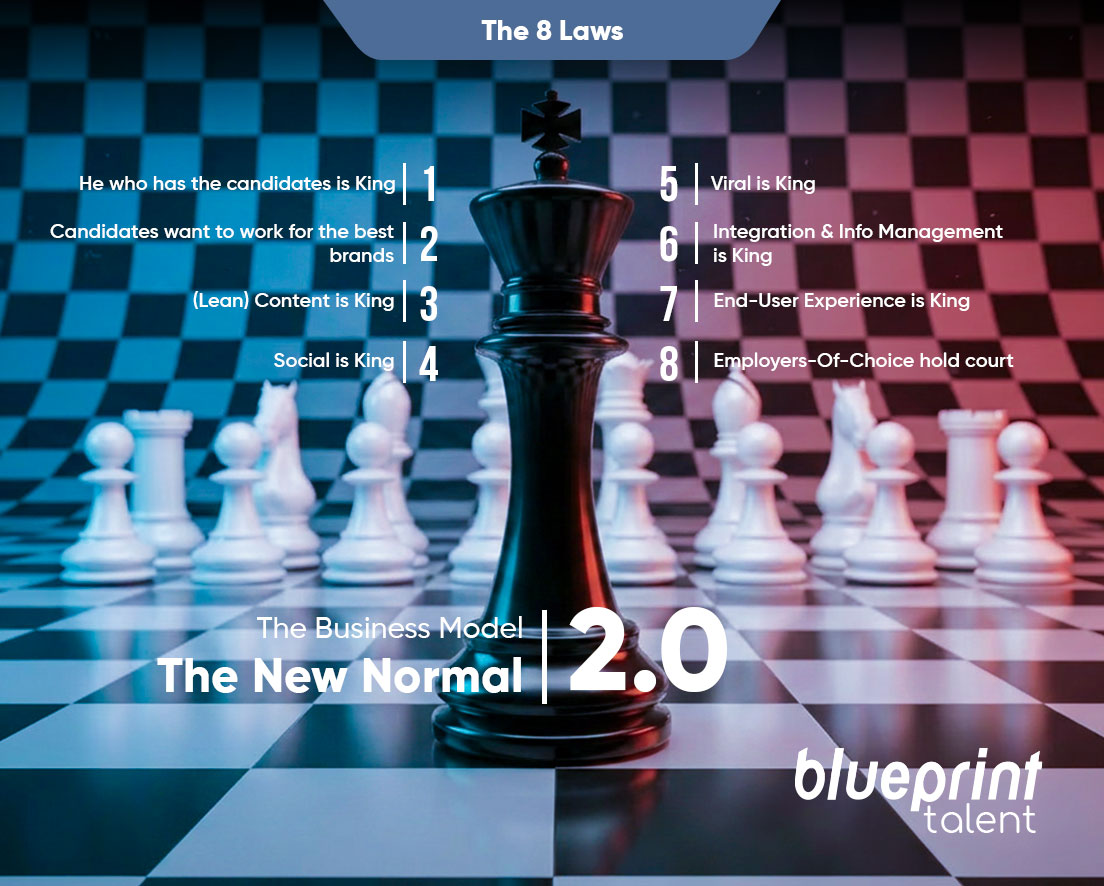
Even when a candidate isn’t quite what we’re looking for, they may know someone who is! At worst, if they felt they’ve had a good interaction with you and now know more about you, then they’ll speak well of your employer brand (and job opportunity) to their network of colleagues and friends. On social media, a referral by a friend or colleague is KING! In other words, viral is KING:
Who knows, today’s ‘wrong’ or passive candidate might be tomorrow’s right and active applicant. If so, interactions like this ensure we’ve identified them and they’re primed for that future vacancy.
4. ‘Are you somewhere feeling lonely or is someone loving you?’
As we all know, the best candidates are often not active candidates, especially for scarce skills.
The best candidates are the passive ones. By passive candidates, we mean those potential candidates who are tucked away in their company performing in their job efficiently and effectively without fuss, day in and day out. The quiet stars! These individuals make up 65-80% of the labour market, depending on the state of the economy.
When we have a vacancy, our first choice would be to fill it with just such a ‘quiet star’. However, they tend not to apply to job ads, because they’re not active job seekers. Also, as recruiters, we don’t have the time needed to identify them and then lure them away from their current job. (HR professionals are used to people applying to their job adverts. Change can be uncomfortable and resisted, even by professional recruiters!)
Also, there’s a lazy assumption that if someone isn’t an active job seeker then they won’t be interested in our vacancy. Often, this isn’t true. Many passive candidates will consider an opportunity when it’s presented to them (assuming it’s broadly in line with their experience and career-path), but -lacking such offers- they prefer to get on with their work rather than enduring the ‘pain’ of applying for new jobs. [And if that doesn’t sell these quiet superstars to you as the sort of people you want to hire, then nothing will!]
Many employers give too little attention to these quiet ‘workhorses’ within their organisations, because they tend not to be extroverted or daily demanding their manager’s attention. Often, they’re under appreciated by their employer (or manager) and they’re aware of it. As a result, Lionel Richie’s lyrical question –“Are you somewhere feeling lonely or is someone loving you?”- is apt for this desirable demographic of the labour market.
If we can find effective ways to access this passive segment of the labour market, then we can mine a rich seam of talent when hiring. And, remember, the passive segment of the labour market is far larger than that of active job seekers. We wouldn’t ignore 65-80+% of the market in another area of the business!
Social media, Google / SEO and Boolean search are digital gifts helping us connect these dots and tap into this hidden segment of the passive-candidate labour market. The onus is on us as HR and recruitment professionals to learn how to use these powerful tools better (or outsource to professionals who can).
The trick with passive candidates is to be always looking for them and engaging with them, whenever the opportunity arises, to establish a passive-applicant pipeline before the vacancy arises.
This is why proactive recruitment is an important part of a talent acquisition strategy. Normally, we rely only on reactive recruitment – basically, advertising an open vacancy that targets only active job seekers. [Reactive recruitment is what most recruitment agencies do too, although they talk a good game otherwise.]
Proactive recruitment is a key part of an employer brand and talent attraction strategy, with specific elements, tools, and core competencies. It needs proper resourcing, but it can be resourced effectively on a lean budget.

Also, it’s a mindset shift for HR and recruitment professionals: it requires being open to serendipitous interactions in your network, especially online, and knowing ‘when to pounce’. In addition, it means managing and marshalling BIG data, particularly in your candidate database (AKA: ATS [applicant tracking system]). This is so you can convert an extensive network of applicants (and their digital ‘friends’) into a powerful talent community and pipeline.
5. ‘Tell me how to win your heart’
Once we’ve identified a suitable (active or passive) candidate online, we need to get their attention and woo them. How do we do this?
A good start is to ask them a question. [Remember Lionel Richie’s wise words: “And I wonder what you do?”],
Try asking candidates what they are looking for in their career and what will entice them to move jobs. It’s much easier than trying to guess! If we’ve gone to the trouble of finding them and reaching out to them, then why wouldn’t we want to find out from them “how to win their heart”, to paraphrase Lionel Richie.
But first, you need to earn the right to ask them such questions, which means you need to ensure eye-catching and relevant multimedia as part of your digital footprint, which makes your interaction with them more credible.
For example, if you’re looking for suitable candidates in a social media Group, then you need to be a credible and active participant of the Group (and not someone who only posts or messages / ads to promote yourself). Social media is ‘social’ and, like all social events, anti-social gate-crashers are rarely welcomed. Another way to build credibility is through the quality of the content and media you post online, which is determined by your content strategy and ecosystem.

6. ‘For I haven’t got a clue’

It’s okay to admit we don’t what we don’t know. 😊
This might be not knowing much about social media and multimedia content production and digital channel integration. Or it might be not knowing much about candidates: where they are (online), what interests them, or what they want?
We are all learning how this ‘interweb’ thing works, even the supposed social media experts.
Candidates are learning too. They’re learning how to present themselves best online (‘Brand-Me’) as well as how best to find and apply for jobs…But candidates are more sophisticated users of digital tools for job-search than HR and recruiters practitioners are in candidate-search. This may sound like a good thing, but what it actually means is that a lot of employers present themselves poorly online.
Yes, there might consistency in the low standard of employer-branding and job-application user-experience, but that isn’t making your employer-brand come across any better and it’s not helping you win in ‘the war for talent’. Also, there’s an opportunity here: if you start now and do this well, you’ll stand out from most employers competing for talent online. Do it now and you can do it on a lean budget; but if you wait until everyone is doing it and then so do you, you’ll be getting much less bang for your buck!
Think of talent acquisition in the digital media landscape as the new ‘Wild West’. There are no guarantees, no rules, nor silver bullets. Much of the terrain is ‘unmapped’, and there’s risk of dangerous ‘beasts and snake-oil salesmen’ at every turn. Some hardy folks have figured out some of it, but no one has mapped it all and laid down the tracks that everyone else can use. For now, it’s up to each company and professional to try to piece the map together (to figure out optimal talent attraction best practice and figure out which of the hardy folk can assist them (and be trusted)).
7. ‘But let me start by saying…I love you’
Aren’t those the words that we all want to hear? Do we ever hear them enough (especially from our employees or employers 😉)?
So, let’s assume we’ve just found our ideal candidate via social media and we’ve learnt what they want / need in order to move jobs. This will have been achieved by identifying them, then approaching them, and then creating a dialogue.
In order to show that we’ve listened to them, we need to make them an offer and present a package that aligns with what the candidate has told us they want. If we don’t, then we’re not communicating in the way Lionel Richie sings about: we’re not communicating, “by saying…I love you.”
Also, our employer-brand needs to align with the reality of working at our company. In other words, our multimedia content needs to be an accurate reflection of the work applied for and the company culture. If it’s not, then we’re setting ourselves up for failure (and of low employee engagement and productivity, as well as high employee turnover). Worse still, applicants will start to share this unauthentic disconnect online, which will hurt future sourcing campaigns. For more on this, read: Should you worry about negative employee reviews.
If we exaggerate (or plain lie) about what it’s like working at our company then it’s much like the person who uses fake pictures on a dating site: it might mean we get more dates, but most of those dates will end without success once the difference between the profile pictures reality becomes evident. Except in HR, we call it ‘employee attrition’ instead of a ‘bad date’.
“I love you” and a long-term relationship of mutual benefit are based on trust and credibility, which comes from authenticity. In order to make a good first impression on candidates and to turn their heads, we can deploy our employer-brand and multimedia content across our various digital channels. We need to ‘win eyeballs’ online. It’s fierce competition winning the war for end-user attention (in their social media feeds), as much as it’s a ‘war for talent’!
So in this blog, we’ve learnt:
- Lionel Richie is the Nostradamus of pop!
- I probably like the song ‘Hello’ a little too much, if the article is any evidence.
- Social media is social and not a broadcast only channel.
- Employers need to court top talent and not assume candidates are lucky to even be applying for your jobs. Top talent always has options!
- Find out where your target candidates are hanging out online (and offline, if relevant), then meet them there. They’re not going to move channels for you. This is doubly true for passive candidates.
- Most employers don’t resource their HR / recruitment teams to be across every digital platform, so your strategy and target labour market demographic(s) will determine which channels you choose. If you choose wrong, it’s a lot of wasted time and effort (and too few applicants). Take your time and get it right, so that you make the right decision.
- Depending on the state of the economy, passive candidates make up between 60-85% of the labour market. By only focussing on active candidates we’re ignoring the vast majority of potential candidates (and often many of the best ones). This is a reactive approach to recruitment. The solution is to add a proactive approach to compliment traditional reactive recruitment. This will improve your applicant pipeline, both in quality and quantity.
- Be social on social media. Engage with and chat to strong candidates, whether they’re immediately available or not.
- The future is already here, in regard to mass digital media and mobile computing. If you’re employer brand and talent attraction strategy are not centred around delivering the best candidate end-user experience possible, you’re leaking prospective applicants like crazy. Every day you delay this transition, the further behind you fall and the greater the cost of playing catch-up.
Let’s end this article the best way possible…with Lionel Richie’s classic 80s music video for this prophetic hit song. So, turn it up loud! You know you want to sing along:
