
Batman Vs Superman:
Top Talent Should ‘Make Love Not War’
You’ll have heard of the epic (and not very good) superhero blockbuster movie – Batman Vs Superman: The Dawn Of Justice released in 2016.
By Dermot Grazebrook, Blueprint Talent

We enjoy a good superhero genre movie and we’re BIG fans of the classic Christopher Nolan Batman trilogy.
But, reasonably, you might be wondering what this cinematic release has to do with talent attraction, recruitment, HR or business generally?
Well, at Blueprint Talent -even more than we’re fans of fun movies- we’re bigger fans of talent. Because talent matters!
So, in the spirit of the Batman Vs Superman movie, we thought these legends of the DC comic universe might have something to teach us about talent management. In particular, what’s it got do with ensuring that the top talent in in your organisation work effectively as teams of professionals… That’s what what we’re going to show in this article.
Again, talent matters! But talent alone is not enough to ensure success in business. What matters is ensuring talented individuals work collaboratively as part of effective teams, within your organisation.
When people don’t get on or cooperate at work, the fall out and turmoil can be destructive:

So, does it really matter when your talented employees (or super heroes) don’t work well as a team? Yes, according to a survey of business by Ernest & Young, it really does matter!
In 2013, Ernest & Young (www.ey.com), a global accountancy firm and management consultancy, published an article summarizing their findings from a business survey they conducted on business performance: Organizations that develop cross-disciplinary, diverse teams perform better (but the lack of ‘inclusive leaders’ hinders success).
Their survey was called The Power Of Many: How Companies Use Teams To Drive Superior Corporate Performance. In this survey analyzing top global companies’ performance, Ernest & Young found that a majority (84%) of business executives said that their organization’s ability to develop and manage teams is essential for future competitiveness. The executives who rated their companies as ‘excellent’ at building diverse teams were more likely to have achieved their target earnings, as well as growth of greater than 10% in 2012.
[As an aside, if diverse and inclusive teams of high-performers is the key to organisational success, then this add another reason for why the new Batman Vs Superman movie is a good business metaphor for the power of effective teams…it’s called The Dawn Of Justice because it introduces Wonder Woman and the start of the Justice League into the DC movie-universe]:
Ernest & Young go on to say that 50% of the 821 respondents in their survey believe that they don’t have leaders in their organisation with the ability to manage and motivate these teams. Yet this ‘leadership absence’ is despite the importance that 85% of these respondents deem ‘inclusive leadership’ to have (i.e. the ability to encourage teams to voice diverse perspectives and dissent), as an effective means of improving organisational performance. [That’s a serious disconnect, people!]
Ernest & Young also observe that many companies struggle to resolve the dilemma of the need for cross-border, cross-functional teams, vesus the preference of employees for face-to-face meetings over other forms of communication. 65% of the survey respondents say that the extent to which teams are facilitated by technology rather than face-to-face interaction has increased over the past 3 years [and that’s a trend that is only going to keep increasing], but face-to-face communication is still the clear leader as the most valued method of communication. [Post pandemic and mass remote work some of these sentiments have probably shifted.]

In direct response to the Ernest & Young survey findings on the importance of teams in an organisation, Fast Company (www.fastcompany.com) – a leading international business magazine – published an article in 2014 about 3-types of dysfunctional teams & how to fix them. For the full Fast Company article, go to: http://www.fastcompany.com/3033275/3-types-of-dysfunctional-teams-and-how-to-fix-them)

In their article, Fast Company explore the dynamics of dysfunctional teams, as well as the critical role of leadership in developing and managing effective teams in a business environment.
As we’ve mentioned already, at Blueprint Talent we believe that talent matters! And for talent to be effectively put to use in an organisation, then high-performing individuals need to work in a cooperative and collaborative manner. In short, most of the time, talent only matters if the individual is a team player, because a company is made up of networks and teams of people.
Steve Jobs articulated this very clearly (as Steve Jobs often did): “My model for business is The Beatles. They balanced each other and the total was greater than the sum of the parts. That’s how I see business: great things in business are never done by one person, they’re done by a team of people.”
In business, we all work in teams at one point or another, regardless of our job function or level of seniority. Whether it’s as an agent in contact-centre, managed by a team leader, or as a HR Manager as part of a cross-functional (or multinational) team.
Some teams are a pleasure to work in, because the project is exciting and/or the other team members are awesome. But, on the other hand, some teams are not a positive experience to participate in. We’ve all experienced both sorts of team.
Fast Company believe there are 3 categories of dysfunctional team dynamics:
The Love Fest
This is when everyone in the team is more concerned about being ‘nice’. Appearing to get along and ‘cooperate’ with one another, but at the expense of actual analysis, rigor, and results. This particular type of dysfunction leads to an insular team that does ‘group think’, further leading to complacency and unrealistic plans or solutions. It sounds like it might be a nice experience, but it’s the sort of group dynamic that real high-performers loathe participating in and instead leave for more dynamic divisions or companies.

The War Zone
It might have a really cool name, but it’s not a cool experience to work in this sort of team. These are teams where competition, politics and mistrust dominate the interpersonal interactions of the group, resulting in the inability to reach agreement and to complete tasks. Its dynamics create dysfunctional silos within the team, which defeat the point and purpose of forming a team in the first place.

The Unteam
This is a ‘team’ only in name and is rather a group of individuals all concerned with the relationship to their direct report (or the most senior person heading the team or project). They only do ‘vertical relationships’ and don’t even pretend to bother with ‘horizontal relationships’ in the team, thereby failing to produce any real collaboration with other team members. Really, when this happens you might as well have not bothered forming a team in the first place.
In the end, the only thing that really comes from such dysfunctional teams is missed opportunity, wasted talent and frustrated employees:
So, what’s Fast Company’s answer for developing and managing good teams?
Well, if you don’t want to read the Fast Company article (see: http://www.fastcompany.com/3033275/3-types-of-dysfunctional-teams-and-how-to-fix-them) because you prefer our blog (and, especially, the Batman Vs Superman theme [And, why wouldn’t you?]), then we’re happy to oblige with a brief summary of the Fast Company ideas here.
Fast Company deploy the analogy of an ecosystem to explain how to build and lead effective teams, in an organisation.
A healthy ecosystem is one that is vibrant and filled with interdependent entities. And likewise an effective team is filled with a diverse group of vibrant people who recognize their interdependent roles in the team/project/company.
In order to ensure a ‘healthy ecosystem’ team dynamic, it helps to have structure and processes to ensure that meetings and discussions are conducted in a manner that facilitate awareness, respect, and communication amongst the team members. Done well, this allows the team to operate in a ‘safe’ environment – one where it’s ‘safe’ to let differences of opinions surface and engage in a robust dialogue to flourish.
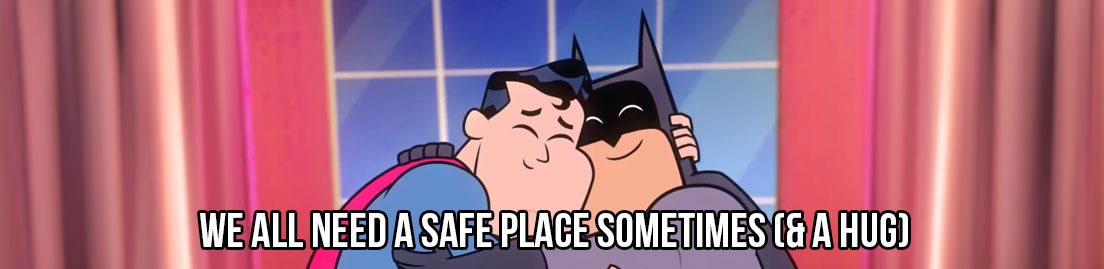
Over and above this, the team’s structures and processes need to ensure the roles of individual team members are clear, as well as there is a process for ensuring effective decisions are reached (and executed).
In such a team, the members will act in a way that recognizes the value of differences in opinion and the unique role (or specialization) that individual team members bring to the group, rather than viewing differences as a ‘competition to be won’.
Fast Company’s advice here is easy to say, but harder to do. In order to execute on creating a ‘healthy ecosystem’ for your organisation’s teams, they suggest following 3-step process:
1. Surface & Manage Differences:
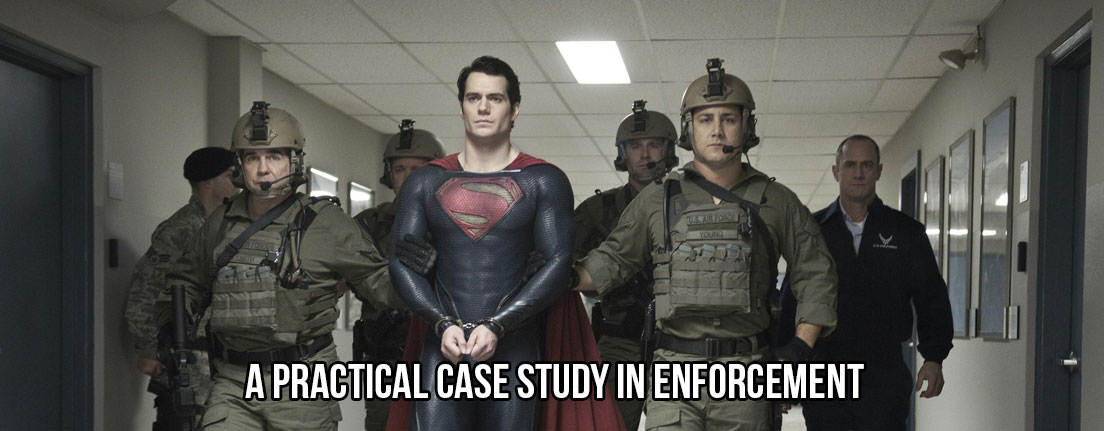
Set ground rules (and processes) for the team interactions to be guided by. And, then enforce them.
In doing this, you are more likely to create a ‘safe’ environment for the team to express and debate differences of opinion and reach consensus on a way forward. In this regard, it’s important that the team has a mechanism (or person ultimately responsible) for reaching a decision and the way forward after any discussion.
2. Build Healthy/Functional Interdependence:
It’s important to recognize that each member of the team has areas of expertise and a unique perspective that adds to the sum of the parts in the team. In this way, each member of the team has a role to play and a contribution to make. If they don’t…then they probably shouldn’t be in the team in the first place!
Ensure that there’s a clear mechanism and process for providing feedback amongst the team. Ensure everyone has the opportunity to be heard and to contribute, where and when it’s appropriate to do so.

3. Engage Stakeholders Outside The Team As A Matter Of Routine:
In order to avoid the team becoming to insular and isolated from the wider organisation, ensure there’s a mechanism and process for engaging with the wider organisation (or community) to brief them on the team’s work and ask for feedback. Then, when the team ‘launches’ or executes its work, it’ll be more likely to have the buy-in of the wider organisation. Think of this a mechanism that ensure frequent ‘reality checks’ for the team’s work.
What is evident from everything we talked about so far in this article is that the role of leadership and management is critical to developing effective teams.
Selecting the right person to lead a team is clearly an important decision, especially if they play a role in then selecting the team itself. How they assess the project/work to be completed by the team, what skills-sets are needed in the team and who is best to fulfill each of those roles (as well as the personal chemistry of those individuals) matters a great deal.
Also, the preparation the team leader does in the build up to the project and prior to team meetings will make or break the team’s effectiveness and success – if a team leader shows up and ‘wings it’ then they’re unlikely to create the mechanisms and processes needed to ensure a ‘safe space’ for ‘awareness, respect, robust communication’ or ‘healthy interdependence’.
A leader needs to ensure that they have a clear perspective on all these matters and clear themselves line of sight to manage all of these elements well. Then the chances of a team delivering effectively is that much greater.
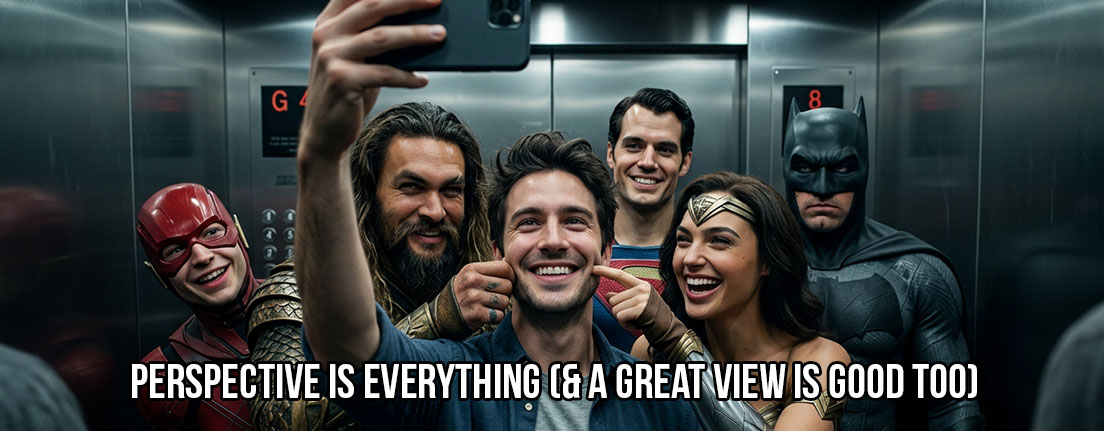
So if you can’t hire Superman, Batman, or Wonder Woman, then you can apply this team-building process you’ll maximize your chances of developing your own super team of productive heroes!
If you’d like to chat to us about talent trends and best practice CLICK HERE to Contact Us.
